


As a conservation architect, I do not look at this painting purely as an art historian; I look at it as a study in load-bearing structures.
Sometimes, to truly understand the buildings we restore, we must look away from the brick and stone. We must look at how the artists of the era understood endurance, duty, and the physical weight of history.
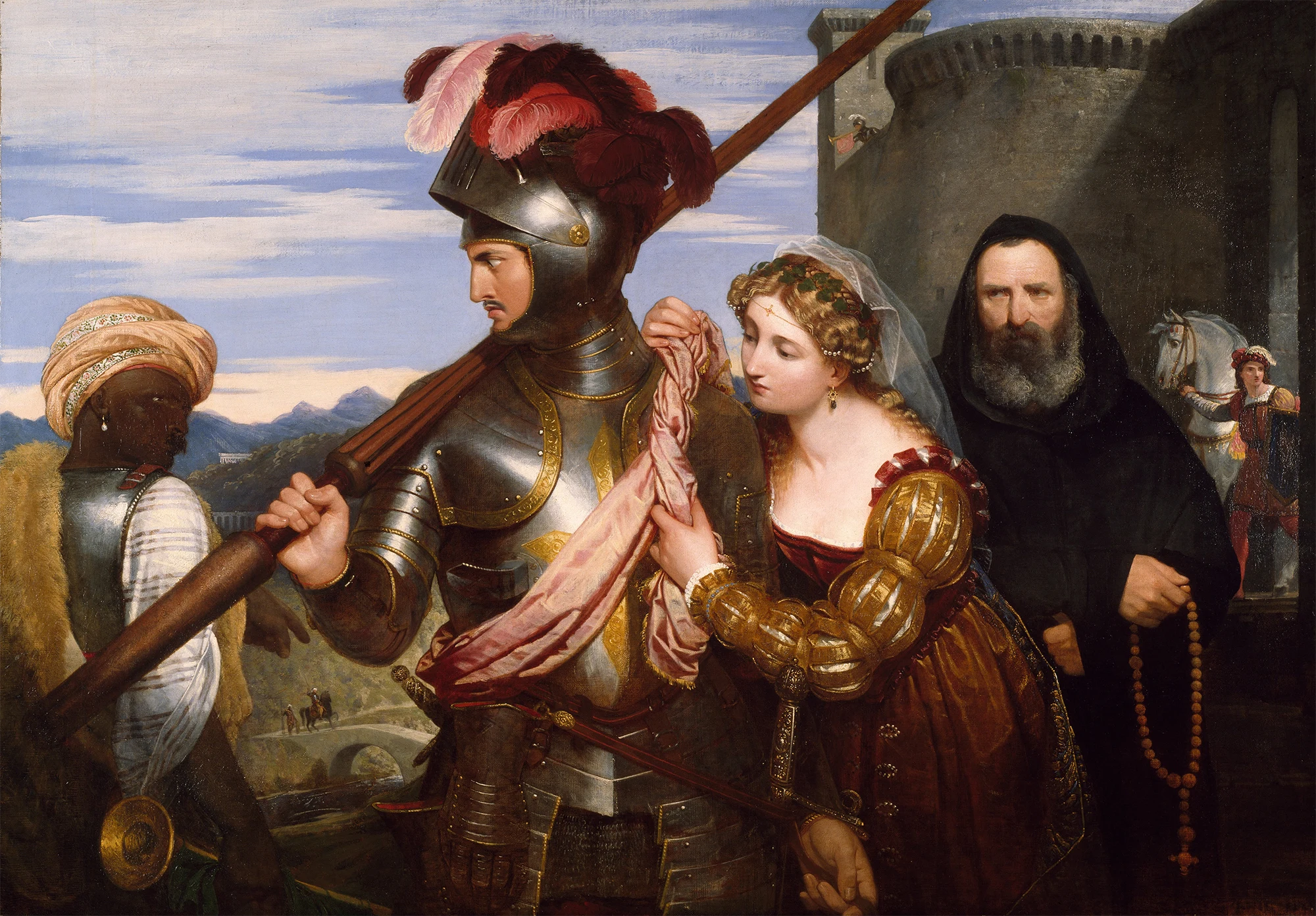
This week, I stepped away from the scaffolding of our current Grade II* listed projects and took a train north. My destination was the Birmingham Museum and Art Gallery (BMAG). My purpose was to stand in front of a single, specific canvas: Sir Charles Lock Eastlake’s 1824 masterpiece, The Champion.
I am currently producing a new episode for The Crafted Space that explores the emotional and structural toll of historic preservation, and to tell that story accurately, I needed our viewers to see this painting.

The Encounter in Birmingham
When you round the corner into the gallery and finally face The Champion, the first thing that strikes you is the sheer, gravitational pull of the composition.
Charles Lock Eastlake (who would later become the first Director of the National Gallery and a profound custodian of British art himself) did not paint a scene of active, glorious battle. Instead, he painted the heavy, exhausted aftermath.
The painting is dominated by a central figure clad entirely in cold, full plate armor. He leans heavily on a long spear. His posture is not triumphant; it is structurally exhausted. He is a man—or perhaps a metaphor—who has borne an immense burden. To his right, a woman with auburn hair, draped in elaborate, soft fabrics, reaches out to touch his pauldron, tying a sash around his chest. To his left stands a foreigner, whom the knight watches with lingering, wary suspicion.
The Architecture of Armor
As a conservation architect, I do not look at this painting purely as an art historian; I look at it as a study in load-bearing structures.
The plate armor in The Champion is rendered with meticulous, academic precision. It is, in essence, a wearable building. It is a protective shell designed to endure external trauma, but one that undeniably exhausts the life inside it.
When we at GQA take on the restoration of a 300-year-old country estate or a bomb-damaged facade, we are looking at a “champion” that has stood its ground against centuries of weather, conflict, and neglect. Historic buildings carry the weight of our cultural memory. Like Eastlake’s knight, they are magnificent, but they are incredibly tired. They are structurally weary.
The Act of the Sash
The emotional core of the painting, however, lies in the woman’s hands. The gesture of tying the sash is one of reverence, care, and necessary intervention.
She represents what we do in conservation architecture. We do not ask the building to go back into battle unchanged. We step in, we assess the fatigue, and we apply the necessary support—whether that is a complex structural underpinning, a lime mortar repointing, or a sensitive modern intervention. We honor the endurance of the structure by caring for it.
Bringing ‘The Champion’ to You
I am bringing this journey to our YouTube channel because the philosophy of The Crafted Space extends beyond architectural floorplans. True luxury, and true heritage design, requires a deep, almost poetic understanding of what it means to preserve something valuable.
Eastlake understood that custodianship is heavy. As we prepare to show you the behind-the-scenes reality of saving Britain’s most complex historic buildings, I want you to keep the image of The Champion in your mind.